
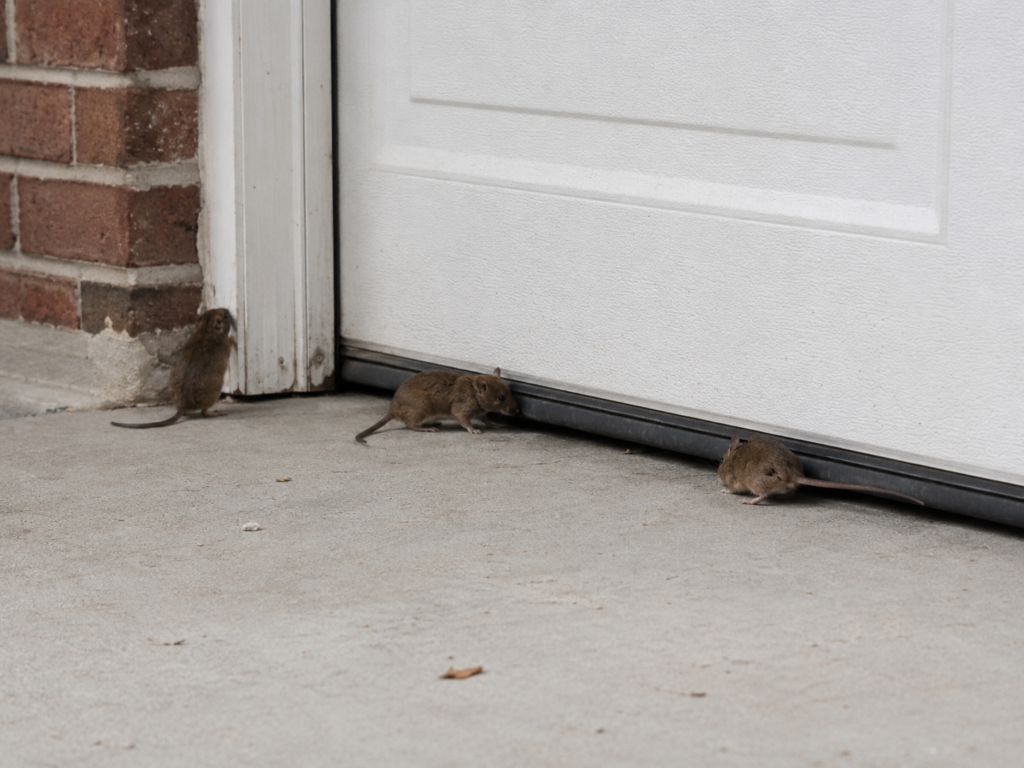
Every spring in Colorado, the same thing happens. Fields thaw, temperatures swing, and mice start looking for somewhere warm and dry to set up shop. Your garage is a prime target, and the bottom of your garage door is almost always how they get in. The good news is that the right garage door bottom seal replacement seals out both pests and the meltwater that follows them in.
Standard garage door bottom seals are made from rubber or vinyl. They compress against the floor to block drafts, but they do nothing to stop a determined mouse. Mice can squeeze through a gap as small as a quarter inch, and worn or cracked seals often leave gaps exactly that size along uneven concrete floors. Spring thaw makes things worse: as the ground shifts and water runs toward low spots, gaps that were barely noticeable in winter become channels for both moisture and wildlife.
Before buying anything, get down and look at your existing seal. Check for:
If you see any of these, the seal needs to go. A damaged seal won’t stop water or pests regardless of what you add on top of it.
This is where a standard replacement falls short. For true pest control for garage spaces, you need a seal specifically designed to resist gnawing and burrowing.
The most effective option is a seal with a steel-wool or galvanized-steel mesh core, such as the Xcluder brand or similar products. Steel wool core seals work because rodents cannot chew through the metal mesh, even if they can compress the outer rubber layer. They install the same way as a standard bottom seal, fitting into the existing retainer track on your garage door.
Look for these features when selecting a rodent-proof seal:
Replacing a bottom seal is a straightforward job for most homeowners. The retainer track (the metal channel that holds the seal) typically stays in place; you slide the old seal out and the new one in. If the retainer itself is bent, rusted, or missing, that’s worth having a professional address at the same time as the seal swap.
A bottom seal closes the gap between the door and the floor. A threshold seal does the opposite: it raises the floor to meet the door. Installing a seal along the interior floor line creates a rubber or vinyl dam that stops spring meltwater, rain runoff, and mud from flowing under the door.
Threshold seals bond directly to the concrete with adhesive and are one of the most cost-effective upgrades available. Used together with a rodent-proof bottom seal, they create a two-layer barrier: the bottom seal compresses against the threshold, and the threshold itself blocks anything running along the floor.
This combination is especially valuable for garages on sloped driveways or in areas where snowmelt pools near the door.
Bottom seals get most of the attention, but garage door weatherstripping on the sides and top of the door frame matters too. Rodents are opportunistic and will find any gap, not just the obvious one at the floor. Foam or vinyl stop bead weatherstripping along the door jamb is inexpensive, easy to replace, and worth inspecting when you address the bottom seal.
According to the CDC’s guidance on rodent prevention, sealing entry points is the single most effective long-term rodent control measure, more effective than trapping or baiting alone. Getting the physical barrier right removes the problem at the source.
DIY bottom seal replacement works well when the retainer track is intact and the door closes evenly. If you’re dealing with a door that doesn’t seal evenly across the full width, an out-of-square frame, or a retainer that needs replacement, a professional installation ensures the seal makes full contact with the floor and actually does its job.
One Clear Choice Garage Doors has been serving Denver and the Front Range since 1998, and our team handles everything from simple seal replacements to full weatherproofing upgrades. Call us or schedule a service appointment online to get your garage sealed up before the next wave of spring visitors arrives.
The most effective rodent-proof bottom seals include a steel-wool or galvanized-steel mesh core that rodents cannot chew through. Brands like Xcluder make seals specifically designed for pest exclusion that install into standard bottom seal retainer tracks. Pairing this with a threshold seal on the garage floor creates a two-layer barrier against both pests and water intrusion.
A garage door threshold seal is the most direct solution. It adheres to the concrete floor just inside the door and forms a raised dam that prevents water from flowing through the gap. For best results, pair a threshold seal with a new bottom seal so the door compresses firmly against the threshold, eliminating any remaining gap.
Most bottom seals last three to five years depending on climate and use, though Colorado’s freeze-thaw cycles can shorten that lifespan. Signs it needs replacement include visible cracks, light showing through the gap when the door is closed, water getting under the door after rain, or any evidence of rodent activity near the base of the door.